


New divers focus on the descent and the bottom. Experienced divers know the ascent is where dives are made safe or unsafe. Every metre you rise lowers the pressure around you and lets nitrogen leave your tissues; rise too fast and it leaves as bubbles. A slow ascent and a safety stop are the simplest, most effective protection against decompression sickness that exists.
The recommended ascent rate
Modern guidance is no faster than nine metres per minute, and slower in the last ten metres, where the relative pressure change per metre is greatest. Your dive computer displays an ascent-rate indicator and warns you if you exceed it. Treat the warning as a hard limit, not a suggestion. A useful mental check: you should never rise faster than the smallest bubbles from your exhaust.
Why the last ten metres matter most
Pressure halves between ten metres and the surface, the largest proportional change of the whole dive. Nitrogen comes out of solution fastest here. Slow down as you approach the safety stop, and slow down again from the stop to the surface. The final three metres should take at least a minute.
The safety stop
A safety stop is three minutes at five metres on every dive, extended to five minutes or more after deeper or longer dives. It gives your body time to release nitrogen at a shallow depth before the final pressure drop. It is called a safety stop because it is optional under no-decompression rules; treat it as mandatory anyway.
Doing it well
- Deploy a surface marker buoy before or during the stop so boats can see you. Our SMB guide explains how.
- Hover neutrally rather than holding a line in a heavy swell, which can drag you up and down. Our buoyancy tips make this easy.
- Watch your computer; most count the stop down for you.
- Use the time. Check your buddy, look for life in the blue, relax.
Deep stops
Some divers add a brief stop at half the maximum depth on deeper dives. Evidence on the benefit for recreational profiles is mixed; follow your computer and training agency, and never let a deep stop shorten your shallow safety stop.
Controlling the ascent
Vent air from your BCD in small amounts as you rise, before it expands and accelerates you. Keep your hand on the inflator and dump valve. Breathe continuously; never hold your breath on ascent, because expanding air in the lungs can cause injury. If you find yourself rising too fast, flare out horizontally to add drag, dump air and look up.
Emergency ascents
If you must ascend quickly, for example on low gas, ascend as slowly as the situation allows, exhale continuously and skip the safety stop only if you truly cannot make it. A missed stop is not an emergency in itself; a rapid ascent is the risk. Rest, breathe oxygen if available and watch for symptoms; our guide on decompression sickness lists them.
Making it automatic
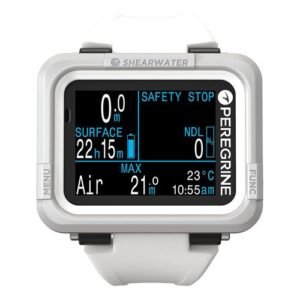
Plan the ascent as part of every dive: at what pressure you turn, where you start up, where you stop. Practise slow ascents on easy dives until they are habit. A computer with a clear ascent-rate display and audible warnings reinforces it; see our dive computers.
Frequently asked questions
Is a safety stop required on shallow dives?
Not required, but recommended on every dive. It costs three minutes and builds the habit.
What if I cannot hold five metres in swell?
Do the stop between four and six metres, hover rather than hold the line, and extend it slightly. Hovering with good buoyancy is the skill to build.
Should I ascend faster if I am cold?
No. Cold increases decompression risk. Ascend slowly and warm up on the surface.
A computer with clear ascent warnings makes safe ascents second nature. Ask us which models display them best.
Shop the gear in this guide
Everything below ships worldwide from the USA with tracking. US delivery is free over $99 and you have 100 days to return anything that is not right.





Related Posts

Why every diver should carry an SMB, choosing open or closed designs, reels versus spools, and a step-by-step method for deploying it safely at depth.

The core scuba hand signals for safety, gas, direction and marine life, plus how to communicate at night, with a slate and when signals go wrong.

What decompression sickness is, why it happens, the symptoms to recognise, first aid steps and the habits that keep your risk low on every dive.

Specialist scuba, freediving & spearfishing equipment — sized, specified and serviced properly.
- Free shipping over $99Real carrier dates shown at checkout.
- 100-day returnsOne window, return shipping paid both ways.
- Price match + 5%Beaten by an authorised dealer? We better it.
- Serviced in-houseOur own technicians, 5-working-day turnaround.
We use cookies to improve your experience. By continuing, you agree to our cookie policy.
I AcceptYour Cart
Add $99.00 more to get free shipping!


Fourth Element Thermocline One Piece Front Zip for Women
Original price was: $560.00.$447.98Current price is: $447.98.
Sharkskin Titanium 2 Men’s Front Zip Full Suit
Original price was: $599.99.$479.97Current price is: $479.97.
Mares Genius Wrist Computer with LED Transmitter
Original price was: $1,499.90.$1,098.00Current price is: $1,098.00.
All Categories
Search
Fourth Element Thermocline One Piece Front Zip for Women
Original price was: $560.00.$447.98Current price is: $447.98.Sharkskin Titanium 2 Men’s Front Zip Full Suit
Original price was: $599.99.$479.97Current price is: $479.97.